
The Cinderella Effect
Most people think Cinderella is a story about escaping poverty by marrying a prince. I don’t think that’s why the story has survived for centuries.
I think Cinderella has endured because it’s about something much more universal: what happens when someone spends so long living beneath shame that they begin to forget who they really are.
There’s a heroine who has the misfortune of losing her mother and seeing her replaced by an evil stepmother and stepsisters. The girl, a high-born damsel, faces the shame of losing her social status and having to live as a servant. Her previous garments are replaced by rags and she has no means to wash herself after doing the cooking and all the household work. She is covered in ashes. And there she gains a new name. We never learn her real name. Cinderella is her new identity, and the name itself means ashes.
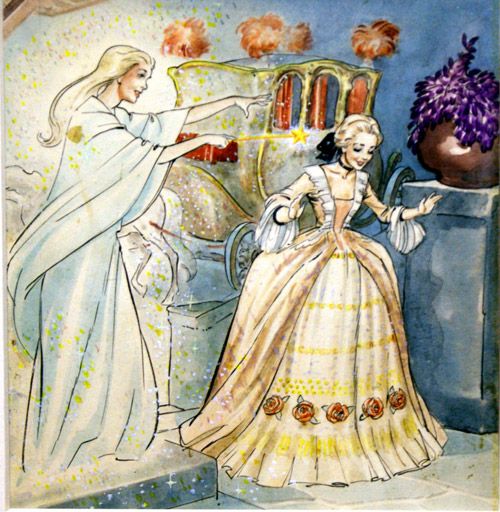
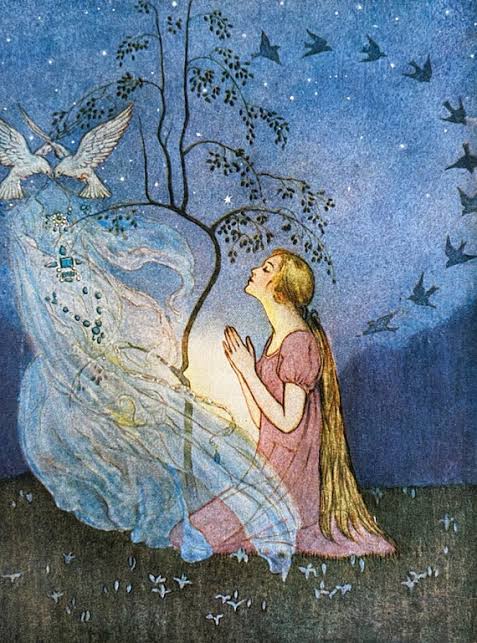
However, in the midst of destruction there’s a detail I don’t often see noticed. Although the world tried to erase her identity she didn’t lose herself entirely. She still longs to go to the ball and she accepts help willingly. The fairy godmother, or the tree, depending on the version you read, helps her chase her dream. Cinderella is not a story of a poor girl who gets married to a prince. It is about a girl whose identity was erased but who still strives for her dreams and a better future. Marriage is presented as the glorious escape from her enemies. It is a metaphor, not a blueprint for women to follow literally.
It is easy to confine the story to the regular interpretations and lose the opportunity to see the patterns that shape our lives. These patterns don’t revolve around the abuse Cinderella suffers. They revolve around her struggle to overcome it. Her happily ever after is simply a condensed version of the inner process she had to undergo before she could stop being Cinderella – ashes – and become her true self. To understand that process more clearly, it helps to bring a modern Cinderella into the spotlight. Miyo, from the manga and its anime adaptation is perhaps the clearest modern representation of why this fairy tale has survived for centuries. There’s a Cinderella inside all of us. Many people know what it feels like to lose themselves. My Happy Marriage gives this reality a human face. Miyo, similar to Cinderella, has faced a life of hardship at the hands of her stepmother, her stepsister, and her father. Her story is indeed almost a carbon copy of the Cinderella tale. She has known no love, affection or care. At the beginning of the story, she too is covered in ashes. She lost her place in the family and was forced to be their servant. Her identity seems to have been completely erased.
Miyo has learned to be complacent, submissive, and to apologize repeatedly in order to survive. When she is sent to the house of her future husband, rumored to be a cruel man, she accepts her fate without protest. Cinderella, likewise, never once dares to face her family or claim what is rightfully hers. However, she never surrenders her inner self the way Miyo does. Left behind in tears, Cinderella still goes to the ball. When the opportunity finally appeared, Cinderella accepted it. She dared to take the first step toward reclaiming her identity.
The anime shows how Miyo keeps reacting as if she were still living with her family. This distinction is important: most of the time, she doesn’t act, she reacts. She reads the room and tries to appease everyone in it, making herself small and invisible. Like Miyo, we often find it easier to keep covering ourselves in ashes, denying ourselves a better, happier life.
Even after leaving her family home, Miyo keeps replaying everything her family used to say to her, throughout most of the story. The ghosts of her past still want her buried in ashes, ashamed and small. Even when she is surrounded by people who genuinely care for her, she cannot believe their words.
The main difference between Cinderella and Miyo is that Cinderella takes an active role in pursuing her freedom. She goes to the ball with the help of a fairy godmother. She never declares that she isn’t worthy of going, or that she is ugly or useless. She knows she mustwash away the ashes, her false identity. The beautiful dress she wears to the ball doesn’t make her a new person. It is an extension of who she really is. It reveals her real identity.
Unlike Cinderella, Miyo has been so deeply wounded by hardship that she no longer believes she deserves a better life. And that frustrates and worries those who deeply care about her. While watching the anime, it is easy to believe the heroine is weak and devoid of agency. However, the story is still unfolding. In this respect, the anime is more powerful for it expands all the possible potential and struggle hidden inside the short narrative of the fairy tale. Miyo begins as a Cinderella, a carrier of trauma and shame. She has lost her sense of self worth. She believes all the lies her family told about her. Her rags reflect her inner pain and scars. It is through the patience, love and affection of her newfound family that Miyo, little by little, starts to wash away the ashes. Her new garments foreshadow who she will become. The Cinderella fairy tale doesn’t show all this because fairy tales are compressed narratives full of symbols. They don’t describe every step of an inner transformation; they illuminate it through images. The act of going to the ball is the equivalent of Miyo regaining her voice and becoming her true self. Just as Cinderella’s dress reveals her true self, Miyo’s new garments reveal the identity that had long been buried beneath shame.
Both heroines are propelled to gain agency over their own futures. No one will do that for them. Help may arrive: a fairy godmother, a new family, but it doesn’t make the choice on their behalf; it only makes that choice easier to carry out once it’s already been made. Not everyone gets a fairy godmother. But the decision to stop believing the lies belongs to the girl covered in ashes, whether or not anyone shows up to remind her of it.
Both families serve the purpose of being the antagonist force to stop the girls from achieving their potential. These forces don’t only exist in fairy tales. They show up in ordinary life, often in the voice of someone with real authority over us. A teacher who tells a student they have no future as a writer, a parent who says a child will never amount to much, a boss who insists someone isn’t capable of more. All of them are playing the same role as the stepmother, whether or not they mean to. More often than not, those ideas end up becoming an inner voice that is able to freeze the will power and suffocate the inner self in a sea of lies and deception.
Cinderella chose not to believe those lies and to believe she was more than a servant. Her courage to go to the ball demonstrates she doesn’t believe the lies spoken about her. Miyo, the modern Cinderella, follows the same path, in a slower fashion. Little by little she starts to be able to separate her true self from the lies told by her family. And both Cinderellas are able to rise from the ashes revealing to the outside their true identity.
That once upon a time story stops being a tale about a well matched marriage and becomes a story about a girl that finds her true self and her voice. And that’s the real magic behind Cinderella. It is a story about inner transformation, rebirth and growth. A story that keeps unfolding every day, inside each of us, whenever we allow our true selves to flourish. And that’s far better than a crystal shoe or an enchanted pumpkin.
 The Literary Raccoon
Leave a comment